
If you are tracking shopify app development trends 2026, the biggest shift is clear: apps are becoming leaner, more embedded, more API-aware, and more tightly aligned with merchant outcomes. This guide breaks down what developers need to watch in 2026, including UX standards, auth and billing changes, and how to build apps that survive platform evolution instead of fighting it.
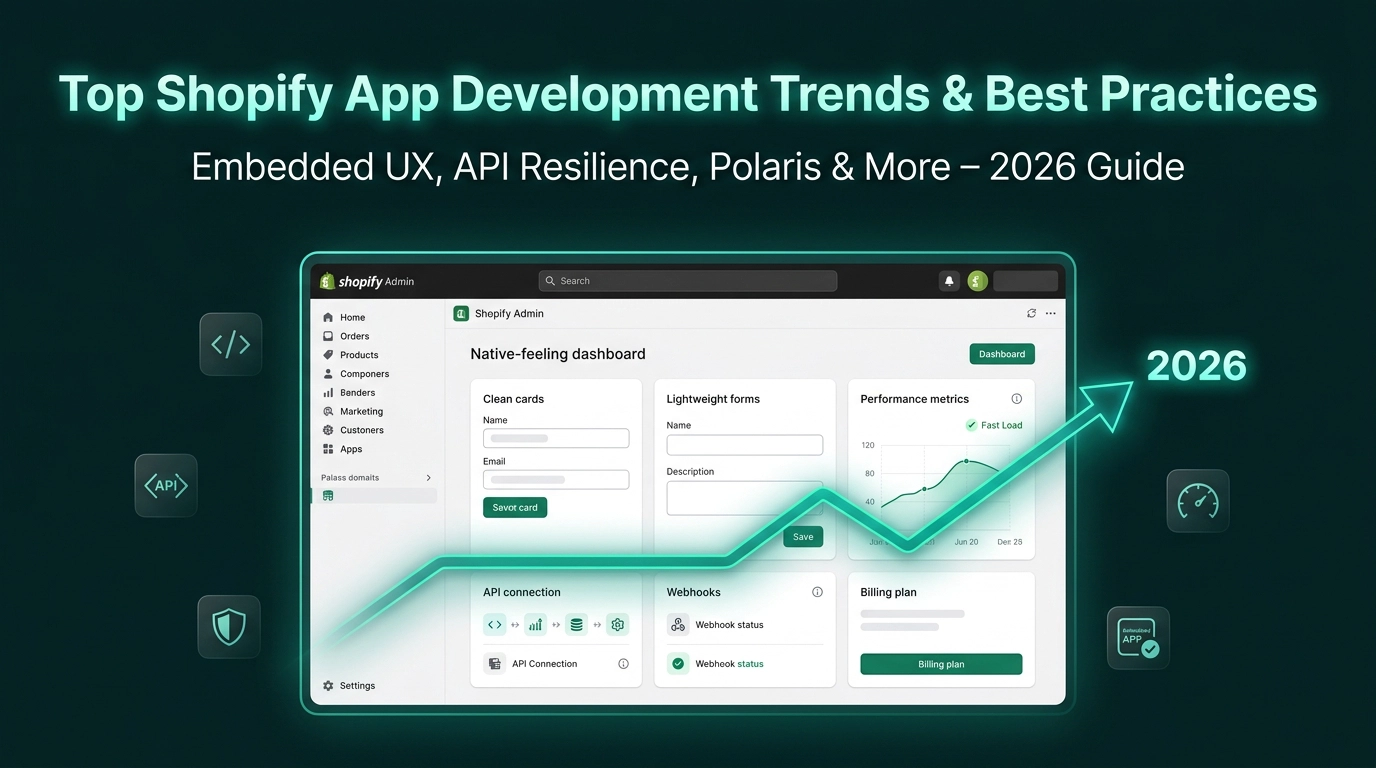
Shopify app work in 2026 is less about shipping features fast and more about shipping the right integration model, the right embedded experience, and the right maintenance strategy. The app ecosystem is maturing, and that means poor UX, outdated auth flows, and weak API handling get exposed much faster.
For developers, the keyword shopify app development trends 2026 is really about future-proofing. Merchants want lower friction, faster admin workflows, better performance, and app experiences that feel native instead of bolted on.
Apps that feel native inside Shopify Admin now outperform disconnected tools. Embedded UX reduces friction and improves merchant adoption.
Apps need better version awareness, cleaner fallbacks, and tighter error handling as Shopify evolves APIs faster.
Slow admin screens, excessive requests, and bloated bundles now directly affect app reviews, churn, and merchant trust.
Merchants expect transparent billing tied to value delivery, not confusing plans or aggressive upgrade gating.
The main point is that shopify app development trends 2026 reward teams that think like product builders, not just integration coders.
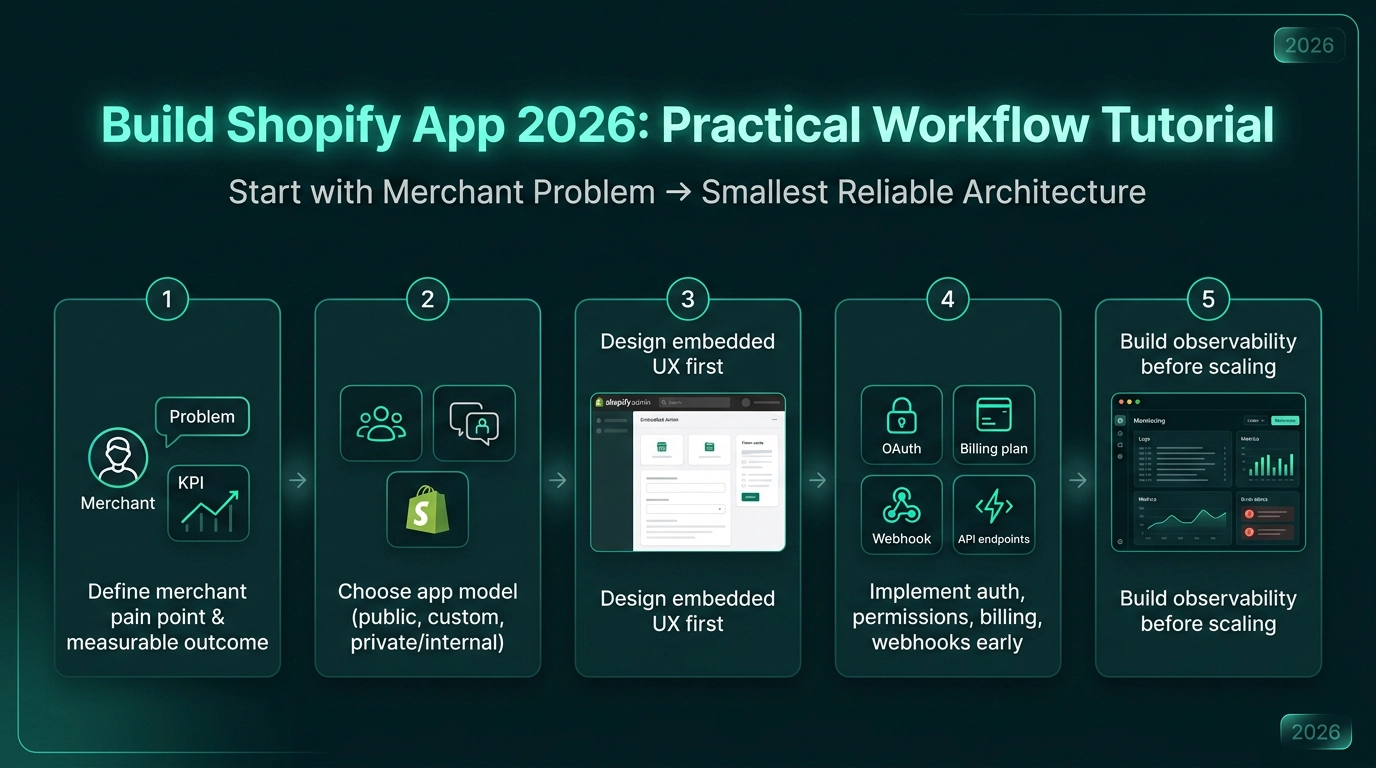
If someone asks how to build shopify app 2026 tutorial style, the clean answer is to start with the merchant problem, not the stack. Then choose the smallest architecture that solves that problem reliably.
The strongest embedded apps in 2026 do not only use Polaris components. They use Polaris correctly. That means consistent hierarchy, clear empty states, fast task completion, and merchant-friendly copy that reduces ambiguity.
Use clear page structure, predictable actions, lightweight forms, and status messaging that matches merchant intent.
Overloading one screen, nesting too many actions, or building a pseudo-SaaS UI that ignores Shopify Admin conventions.
Shopify Polaris app best practices are really about reducing learning cost. Merchants should understand the app immediately because it feels aligned with the platform they already use every day.
Authentication and monetization are two areas where many apps become fragile. In 2026, developers need cleaner token handling, better install-state validation, and billing logic that remains robust when plans, trials, or usage models change.
| Area | What to focus on | Best practice |
|---|---|---|
| OAuth | Session stability and reinstall safety | Validate state and reauth paths carefully |
| Billing | Plan logic and merchant clarity | Show value before hard upsell walls |
| API versions | Deprecations and schema shifts | Track version changes proactively |
| Webhooks | Idempotency and retry safety | Treat retries as normal behavior |
The phrase shopify app oauth billing api updates matters because these are not side concerns. They are the foundation of a stable app business.
A strong shopify custom app development guide starts with choosing the right app boundary. Not every requirement needs a public app. Some merchant workflows are better served with custom apps, admin extensions, or hybrid architecture tied to internal systems.
Custom Shopify work succeeds when the app solves a real merchant workflow cleanly, not when it tries to become a bloated all-in-one platform.
Many developers overbuild the backend without confirming that the merchant workflow is worth solving.
An app can be technically strong and still fail because it feels foreign inside Shopify Admin.
Apps lose momentum when merchants do not understand setup, permissions, or first value within minutes.
Apps break quietly when API changes, webhook issues, and billing edge cases are treated as afterthoughts.
The biggest trends are embedded-first UX, stronger API resilience, better performance discipline, and cleaner billing and onboarding experiences for merchants.
Start with one merchant pain point, choose the correct distribution model, and build onboarding, permissions, and observability alongside the core feature.
Follow Shopify Admin conventions, keep workflows obvious, reduce clutter, use clear status feedback, and avoid UI patterns that feel disconnected from the platform.
Because auth, billing, and API stability directly affect installs, revenue, and merchant trust. These are core product concerns, not backend details.
Use a custom app when the workflow is merchant-specific, tightly tied to internal operations, or not meant for broad marketplace distribution.
I build custom Shopify and WooCommerce solutions focused on maintainable architecture, performance, embedded UX, and platform-safe integrations.